





Development of bombesin-tubulysin conjugates using multicomponent chemistry to functionalize both the payload and the homing peptide

Development of bombesin-tubulysin conjugates using multicomponent chemistry to functionalize both the payload and the homing peptide

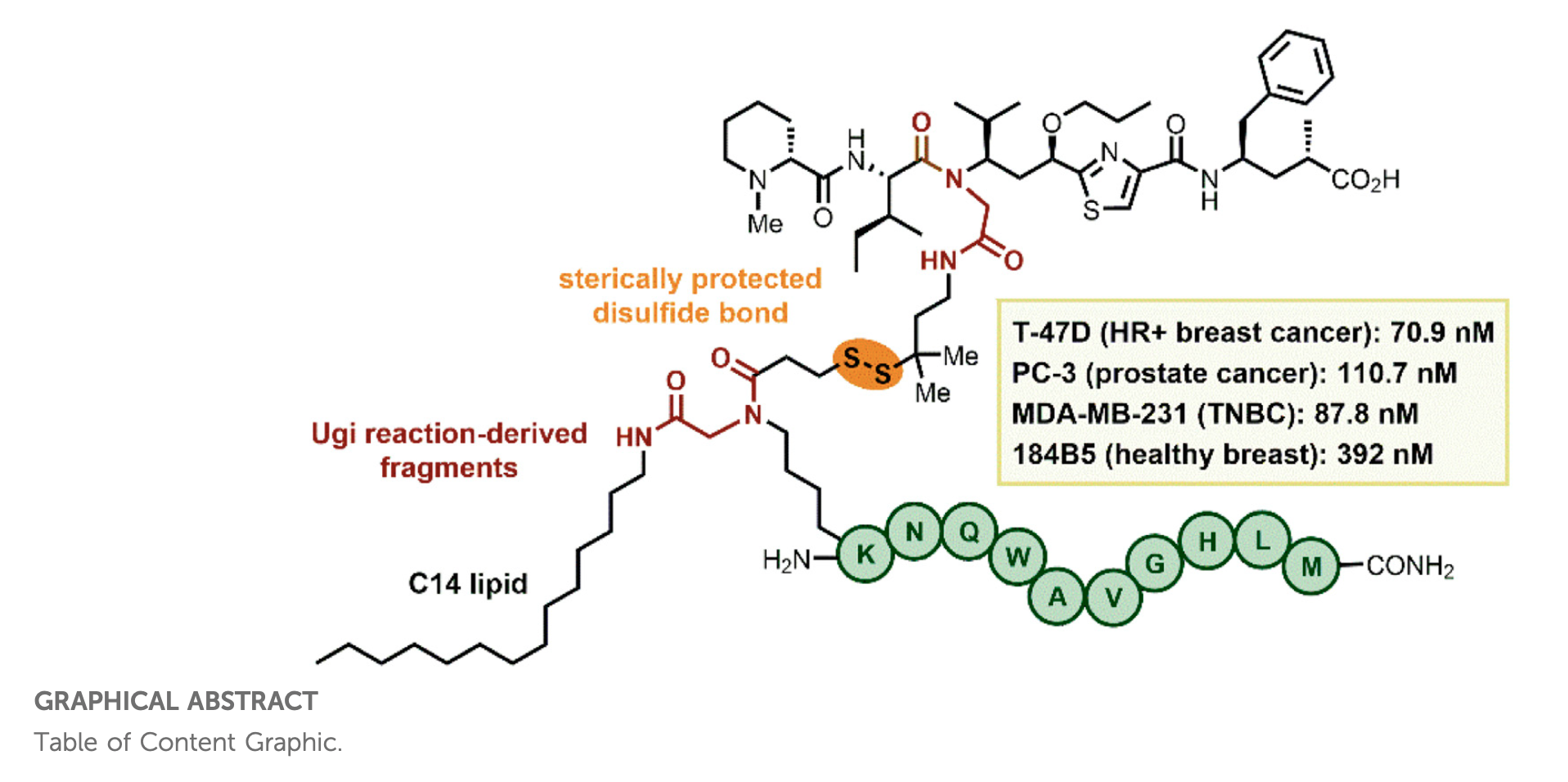
Peptide-drug conjugates (PDCs) have recently gained significant attention for the targeted delivery of anticancer therapeutics, mainly due to their cost-effective and chemically defined production and lower antigenicity compared to ADCs, among other benefits. In this study, we designed and synthesized novel PDCs by conjugating new thiol-functionalized tubulysin analogs (tubugis) to bombesin, a peptide ligand with a relevant role in cancer research. Two tubulysin analogs bearing ready-for-conjugation thiol groups were prepared by an on-resin multicomponent peptide synthesis strategy and subsequently tested for their stand-alone in vitro anti-proliferative activity against human cancer cells, which resulted in IC50 values in the nanomolar range. In addition, various fluorescently labeled [K5]-bombesin(6–14) peptides, non-lipidated and lipidated with fatty acid chains of variable length, were also synthesized using the versatile multicomponent chemistry. These bombesin derivatives were tested for their gastrin-related peptide receptor (GRPR)-mediated internalization into cancer cells using flow cytometry, proving that the lipid tail (especially C14) enhances the cell internalization. Using the tubugi toxins and bombesin peptides, three different bombesin-tubugi conjugates were synthesized with different cleavage propensity and lipophilicity. Preliminary in vitro experiments revealed that, depending on the linker and the presence of a lipid tail, these novel PDCs possess good to potent anticancer activity and moderate selectivity for GRPR-overexpressing cancer cells.

Alpha-1 antitrypsin inhibits pertussis toxin

Alpha-1 antitrypsin inhibits pertussis toxin

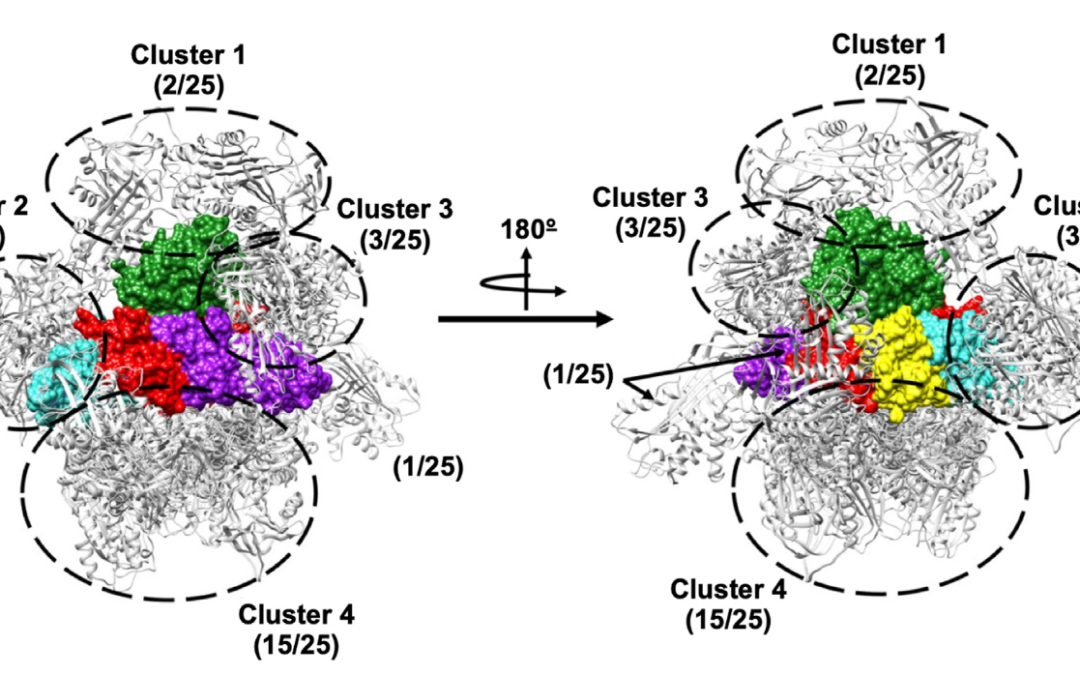
Pertussis (whooping cough) is a vaccine-preventable but re-emerging, highly infectious respiratory disease caused by Bordetella pertussis. There are currently no effective treatments for pertussis, complicating care for nonvaccinated individuals, especially newborns. Disease manifestations are predominantly caused by pertussis toxin (PT), a pivotal virulence factor classified as an ADP-ribosylating AB-type protein toxin. In this work, an unbiased approach using peptide libraries, bioassay-guided fractionation and mass spectrometry revealed α1-antitrypsin (α1AT) as a potent PT inhibitor. Biochemistry-, cell culture-, and molecular modeling-based in vitro experimentation demonstrated that the α1AT mode of action is based on blocking PT-binding to the host target cell surface. In the infant mouse model of severe pertussis, α1AT expression was reduced upon infection. Further, systemic administration of α1AT significantly reduced B. pertussis-induced leukocytosis, which is a hallmark of infant infection and major risk factor for fatal pertussis. Taken together our data demonstrates that α1AT is a novel PT inhibitor and that further evaluation and development of α1AT as a therapeutic agent for pertussis is warranted. Importantly, purified α1AT is already in use clinically as an intravenous augmentation therapy for those with genetic α1AT deficiency and could be repurposed to clinical management of pertussis.

Anti-biofilm peptides can rescue fluconazole and amphotericin B efficacies against Candida albicans

Anti-biofilm peptides can rescue fluconazole and amphotericin B efficacies against Candida albicans

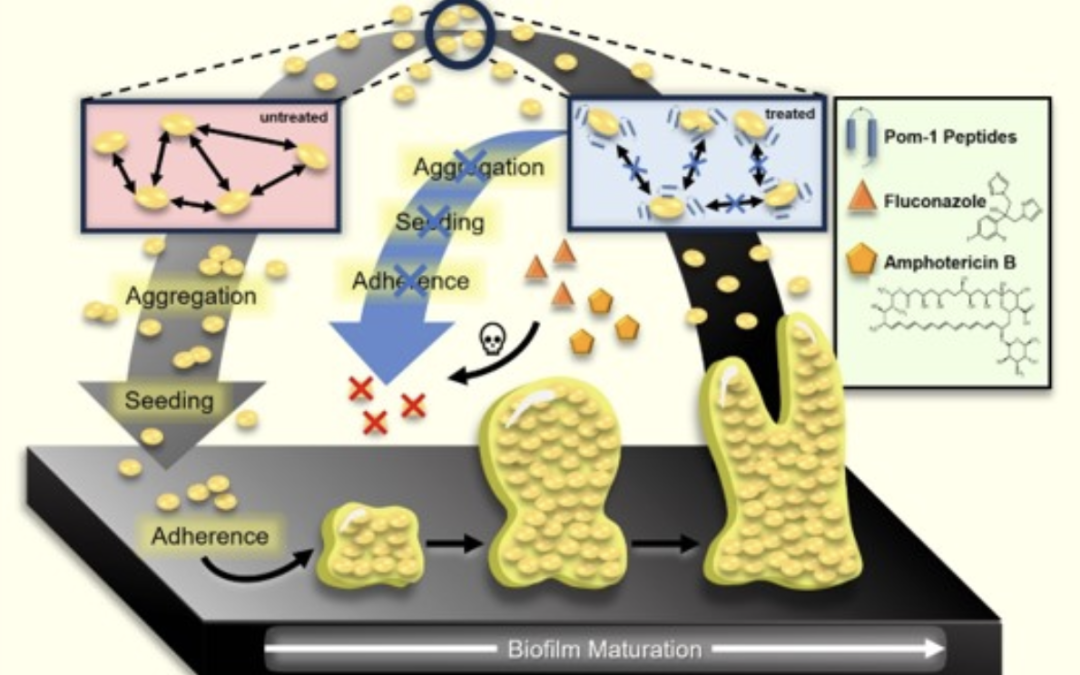
Candida albicans infections are a global health thread and challenge healthcare environments due to acquired resistances against prominent antifungals like amphotericin B and fluconazole, which additionally have severe adverse effects. The peptide Pom-1 originally isolated from the freshwater mollusk Pomacea poeyana, and its derivatives Pom-1A-F have proven their potential against biofilms of clinical C. albicans isolates and were suspected to act without candidolytic pore-formation. Here, Pom-1 and its derivatives were shown to act as neutralizing antimicrobial peptides (nAMPs) inhibiting cell-cell interactions and hence biofilm formation. Combining Pom-1 nAMPs with fluconazole and amphotericin B restored their efficacy against resistant C. albicansisolates. Addition of Pom-1 nAMPs allowed to reduce required concentrations to 10 – 50% below their described effective therapeutic doses. This opens doors not only to mitigate adverse effects of fluconazole and amphotericin B therapies, but also towards novel combination therapies against C. albicans as a severe re-emerging pathogen.

Ancient evolutionary origins of hepatitis E virus in rodents

Ancient evolutionary origins of hepatitis E virus in rodents

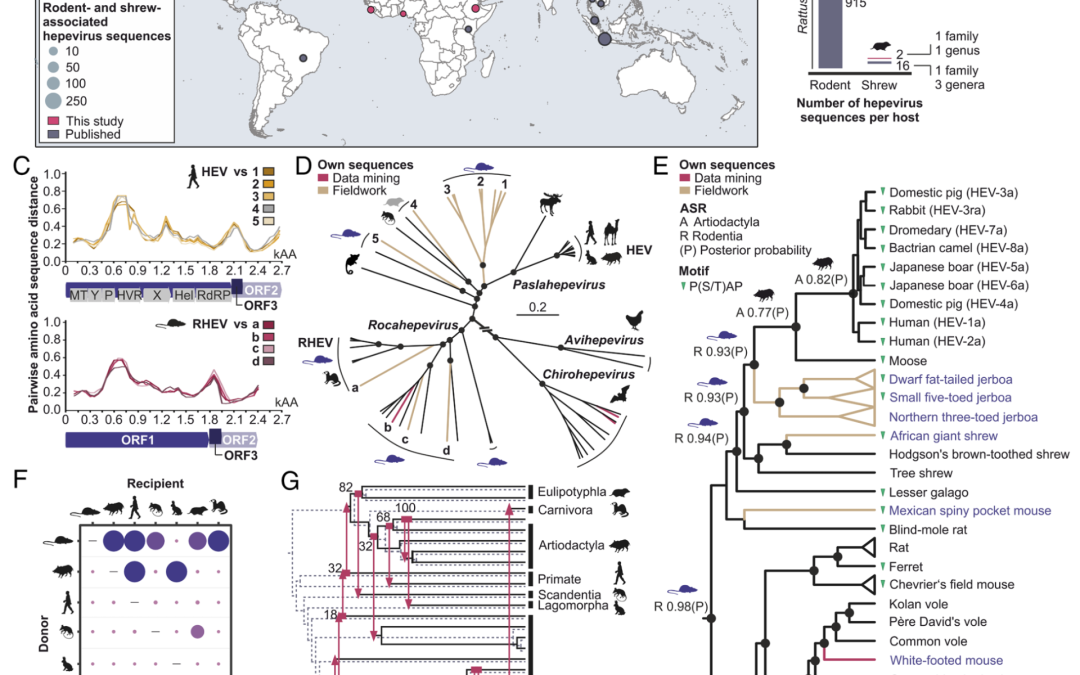
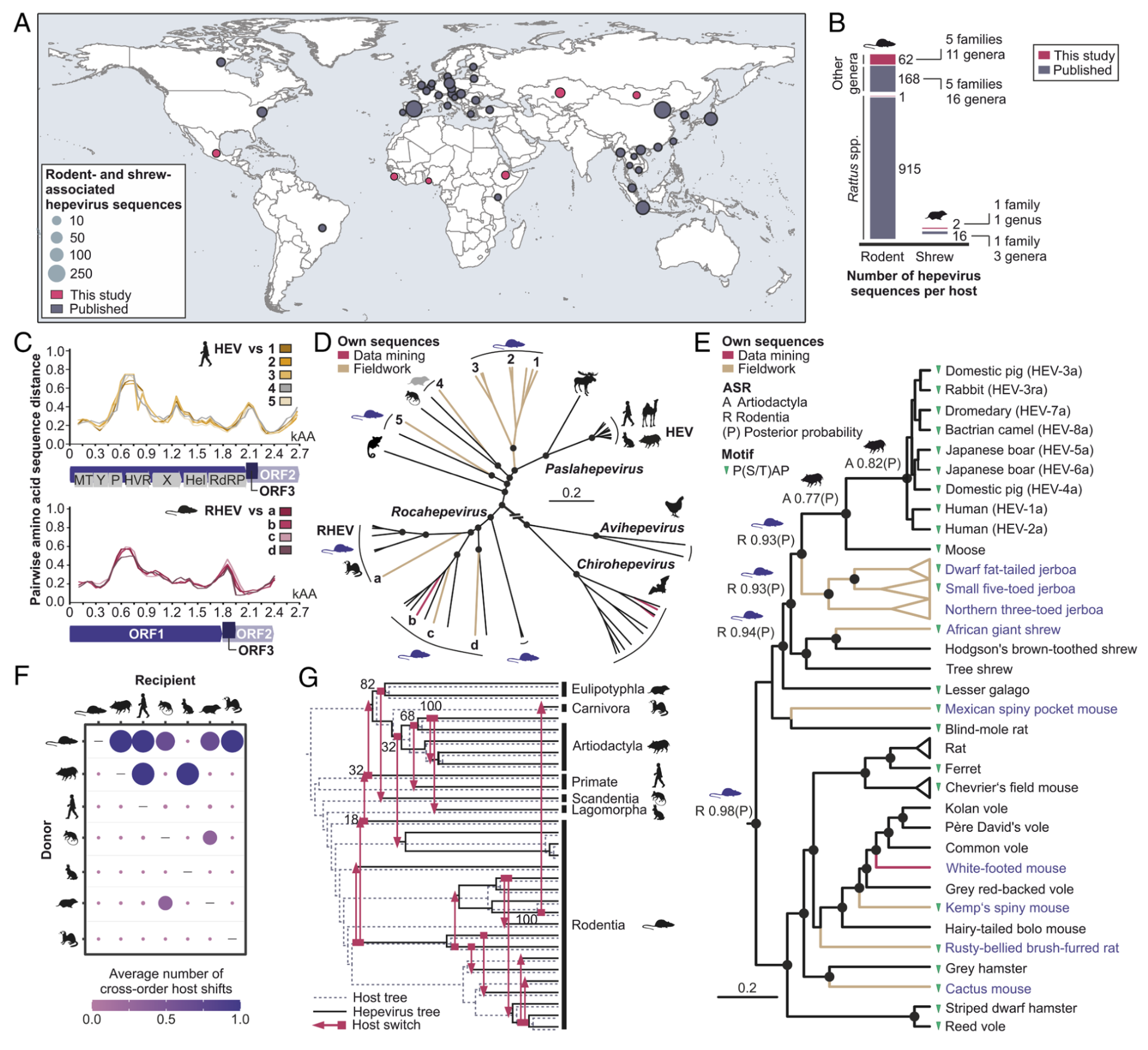
Hepatitis E virus (HEV; family Hepeviridae) infections cause >40,000 human deaths annually. Zoonotic infections predominantly originate from ungulates and occasionally from rats, highlighting the zoonotic potential of rodent-associated hepeviruses. We conducted host genomic data mining and uncovered two genetically divergent rodent-associated hepeviruses, and two bat-associated hepeviruses genetically related to known bat-associated strains. We thus analyzed 2,565 liver specimens from 108 rodent and shrew species sampled from globally understudied regions and hosts in Africa, Asia, and Latin America during 2011-2018 for hepeviruses by RT–PCR. We detected 63 positive field samples (2.5%, 95% CI 1.9-3.1) from 14 animal species, including two coinfections with genetically divergent strains and significant variation (X2, P < 0.001) in detection rates between study sites. Strain-specific qRT–PCR assays showed virus concentrations between 9.2 × 10² and 3.2 × 10⁹ copies/g. We recovered 24 near-complete hepeviral genomes from rodents, shrews, and bats, all showing three partially overlapping open reading frames (ORFs), some including putative late domains that may be associated with quasi-envelopment. Rodent-derived hepeviruses grouped into five clades clustering in basal sister relationship to human- (31 to 84% distance in translated ORF1-3) and rat-associated HEV. Parsimony-based analyses and cophylogenetic reconciliations revealed that rodents were predominant sources of hepeviral cross-order host shifts. Bayesian ancestral state reconstructions substantiated a direct origin of human-associated HEV in ungulates such as swine and camelids (posterior probability 0.8), whereas the nonrecent evolutionary origins of human- and ungulate-associated HEV were projected to rodent hosts (posterior probability > 0.9). Our results elucidate the genealogy of human HEV and warrant increased surveillance and experimental risk assessments for rodent-associated hepeviruses.

Cm-p5, a molluscan-derived antifungal peptide exerts its activity by a membrane surface covering in a non-penetrating mode

Cm-p5, a molluscan-derived antifungal peptide exerts its activity by a membrane surface covering in a non-penetrating mode

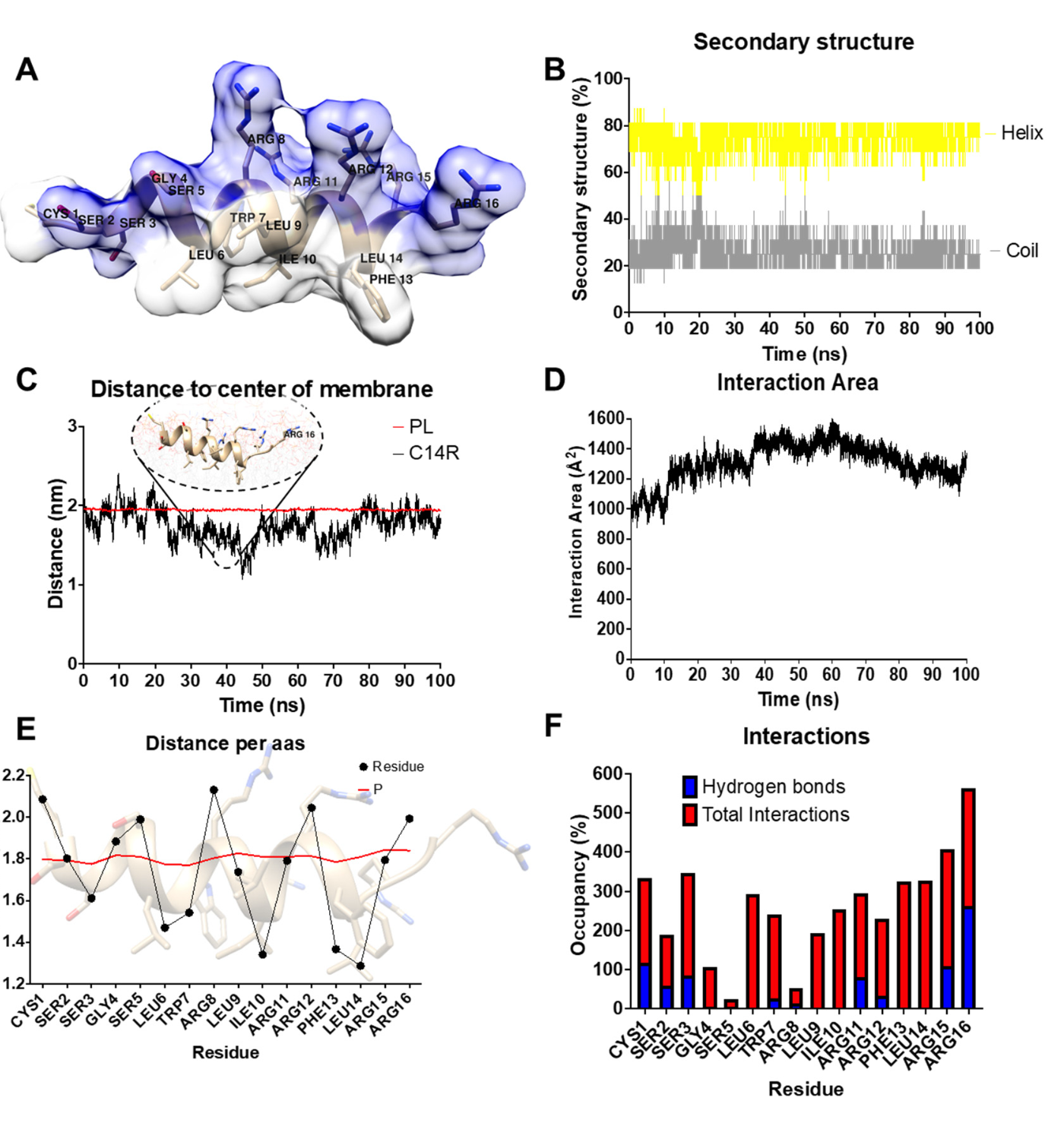
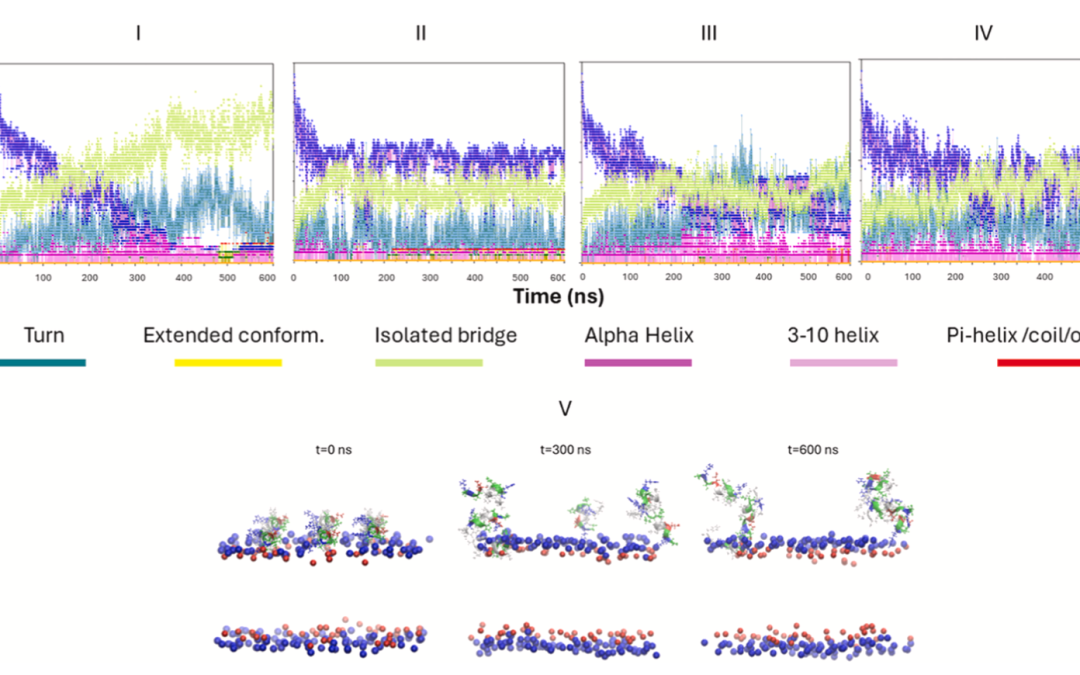
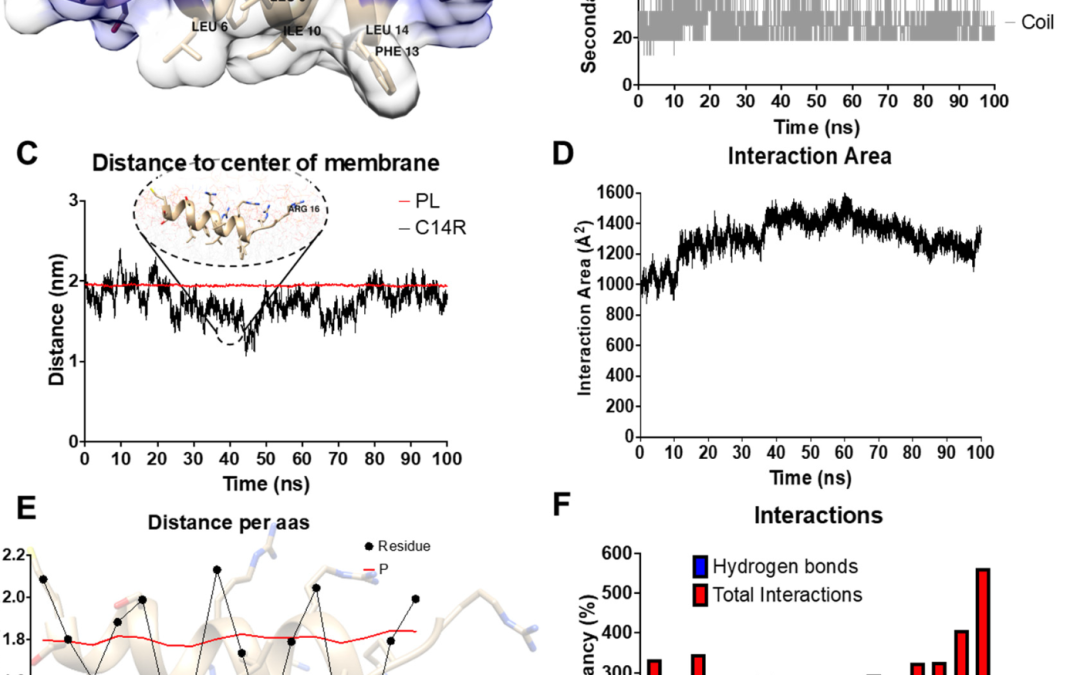
Amidst the health crisis caused by the rise of multi-resistant pathogenic microorganisms, Antimicrobial Peptides (AMPs) have emerged as a potential alternative to traditional antibiotics. In this sense, Cm-p5 is an AMP with fungistatic activity against the yeast Candida albicans. Its antimicrobial activity and selectivity have been well characterized; however, the mechanism of action is still unknown. This study used biophysical approaches to gain insight into how this peptide exerts its activity. Stability and fluidity of lipid membrane were explored by liposome leakage and Laurdan generalized polarization (GP) respectively, suggesting that Cm-p5 does not perturb lipid membranes even at very high concentrations (≥100 µm.L−1). Likewise, no depolarizing action was observed using 3,3′-propil-2,2′-thyodicarbocianine, a potential membrane fluorescent reporter, with C. albicans cells or the corresponding liposome models. Changes in liposome size were analyzed by Dynamic Light Scattering (DLS) data, indicating that Cm-p5 covers the vesicular surface slightly increasing liposome hydrodynamic size, without liposome rupture. These results were further corroborated with Langmuir monolayer isotherms, where no significant changes in lateral pressure or area per lipid were detected, indicating little or no insertion. Finally, data obtained from molecular dynamics simulations aligned with in vitro observations, whereby Cm-p5 slightly interacted with the fungal membrane model surface without causing significant perturbation. These results suggest Cm-p5 is not a pore-forming anti-fungal peptide and that other mechanisms of action on the membrane as some limitation of fungal nutrition or receptor-dependent transduction for depressing growth development should be explored.

Discovery and biological confirmation of a highly divergent Tacaribe virus in metatranscriptomic data from neotropical bats

Discovery and biological confirmation of a highly divergent Tacaribe virus in metatranscriptomic data from neotropical bats

First isolated from neotropical fruit bats in Trinidad in 1956, Tacaribe virus (TCRV) has rarely been detected since. We searched for New World arenavirus reads in roughly 5.7 million sequencing runs available on public databases using Serratus. We recovered a complete genome of a divergent TCRV in metatranscriptomic data derived from heart and eye tissue of an adult male Jamaican fruit-eating bat sampled in the Dominican Republic, 2014. In total, 2,733 reads were mapped resulting in mean coverages of 7.4-fold for the L and 10.2-fold for the S segment. Re-testing original bat specimens showed the highest viral loads in liver tissue (245 copies/mg). Sanger sequencing of PCR amplicons from liver confirmed correctness of and completed the genome recovered from metatranscriptomic data, revealing conserved arenavirus genomic organization, length, intergenic regions, and genome termini. The newly found TCRV strain tentatively named DOM2014 clustered in a basal sister relationship to all other known TCRV strains with which it shared between 83.3%–86.0% genomic and 91.8%–93.7% translated amino acid sequence identity across protein-coding regions. DOM2014 showed a conserved glycine, proline, proline, threonine (GPPT) nucleoprotein motif, which is essential for TCRV interferon β antagonism. Our data confirm the association of TCRV with the bat genus Artibeus put into question by lethal experimental infections and scarce bat-derived TCRV genomic data. Broad genetic diversity and geographic spread require assessments of TCRV strain-associated pathogenicity, particularly for DOM2014 as a highly divergent TCRV strain. Confirmation of genomic database findings by testing original specimens provides robustness to our findings and supports the usefulness of metatranscriptomic studies.