Epidemiological, virological and clinical characterization of a Dengue/Zika outbreak in the Caribbean region of Costa Rica 2017–2018

Epidemiological, virological and clinical characterization of a Dengue/Zika outbreak in the Caribbean region of Costa Rica 2017–2018

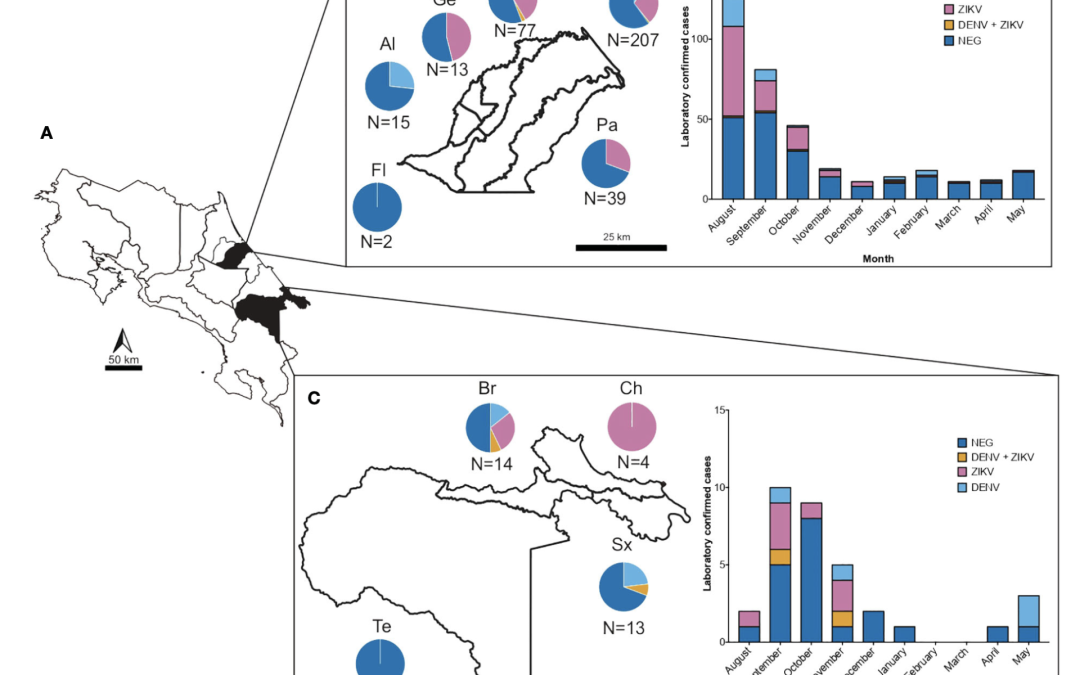
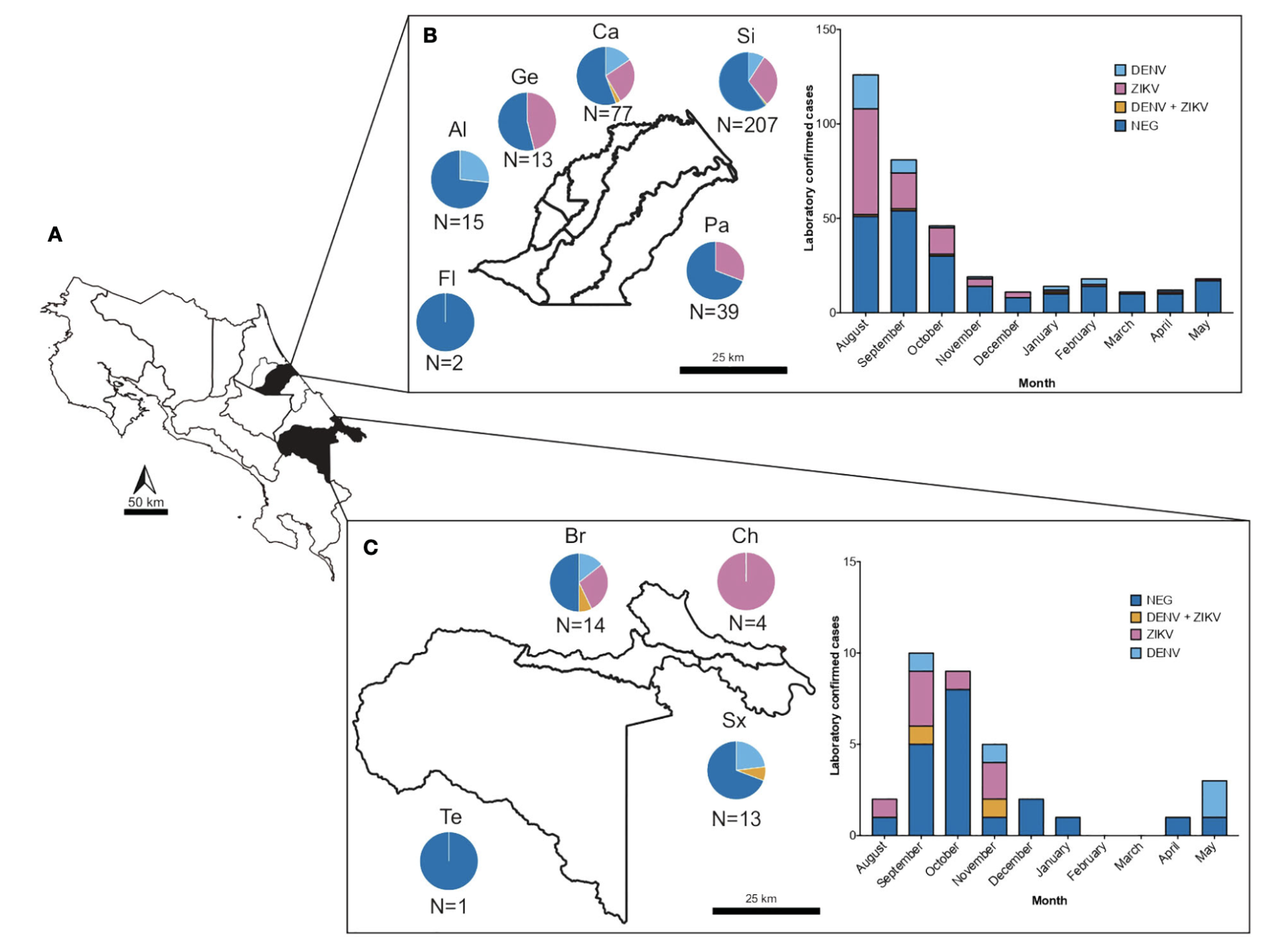
The increase in incidence and geographical expansion of viruses transmitted by the Aedes mosquitoes, such as dengue (DENV) and zika (ZIKV) in the Americas, represents a burden for healthcare systems in tropical and subtropical regions. These and other under-detected arboviruses co-circulate in Costa Rica, adding additional complexity to their management due to their shared epidemiological behavior and similarity of symptoms in early stages. Since diagnostics of febrile illness is mostly based on clinical symptoms alone, we gathered acute-phase serum and urine from 399 samples of acute dengue-like cases from two healthcare facilities of Costa Rica, during an outbreak of arboviruses from July 2017 to May 2018, and tested them using molecular and serological methods. The analyses showed that of the clinically presumptive arbovirus cases that were reported, only 39.4% (n=153) of the samples were confirmed positive by RT-PCR to be DENV (DENV (10.3%), CHIKV (0.2%), ZIKV (27.3%), or mixed infections (1.5%). RT-PCR for other alphaviruses and flaviviruses, and PCR for Leptospira sp were negative. Furthermore, to assess flavivirus positivity in post-acute patients, the negative sera were tested against Dengue-IgM. 20% of sera were found positive, confounding even more the definitive number of cases, and emphasizing the need of several distinct diagnostic tools for accurate diagnostics. Molecular characterization of the prM and E genes from isolated viruses revealed that the American/Asian genotype of DENV-2 and the Asian lineage of ZIKV were circulating during this outbreak. Two different clades of DENV-2 American/Asian genotype were identified to co-circulate in the same region and a difference in the platelet and leukocyte count was noted between people infected with each clade, suggesting a putative distinct virulence. Our study sheds light on the necessity for healthcare strategies in managing arbovirus outbreaks, emphasizing the importance of comprehensive molecular and serological diagnostic approaches, as well as molecular characterization. This approach aids in enhancing our understanding of the clinical and epidemiological aspects of arboviral diseases during outbreaks. Our research highlights the need to strengthen training programs for health professionals and the need to increase research-based on laboratory evidence for diagnostic accuracy, guidance, development and implementation of public health interventions and epidemiological surveillance.


Ancient evolutionary origins of hepatitis E virus in rodents

Ancient evolutionary origins of hepatitis E virus in rodents

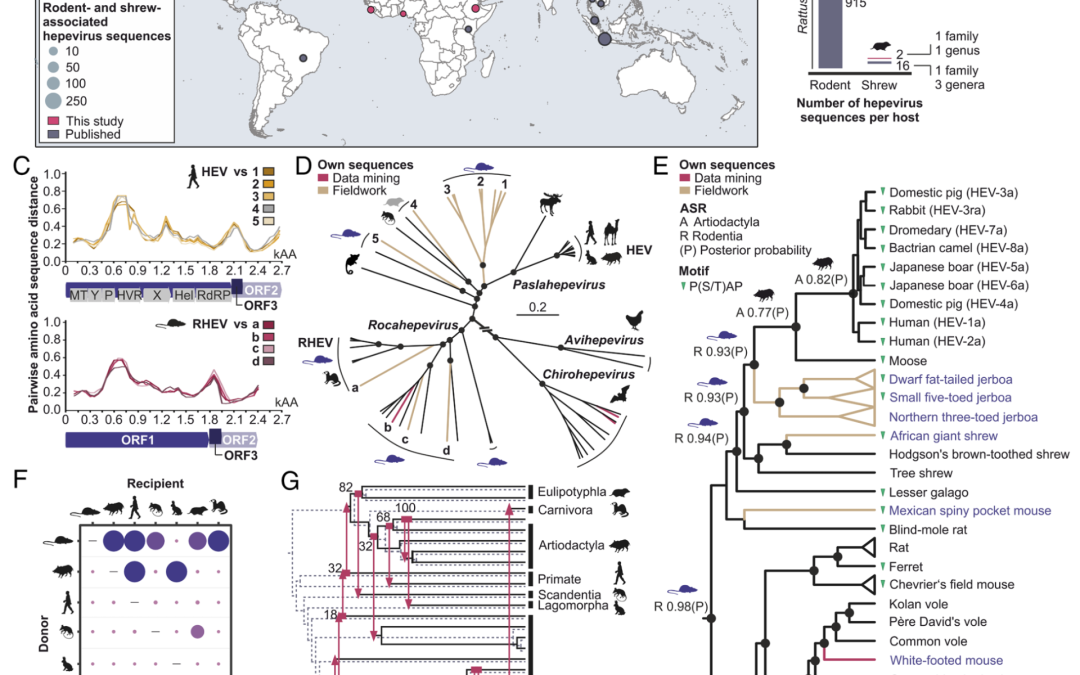
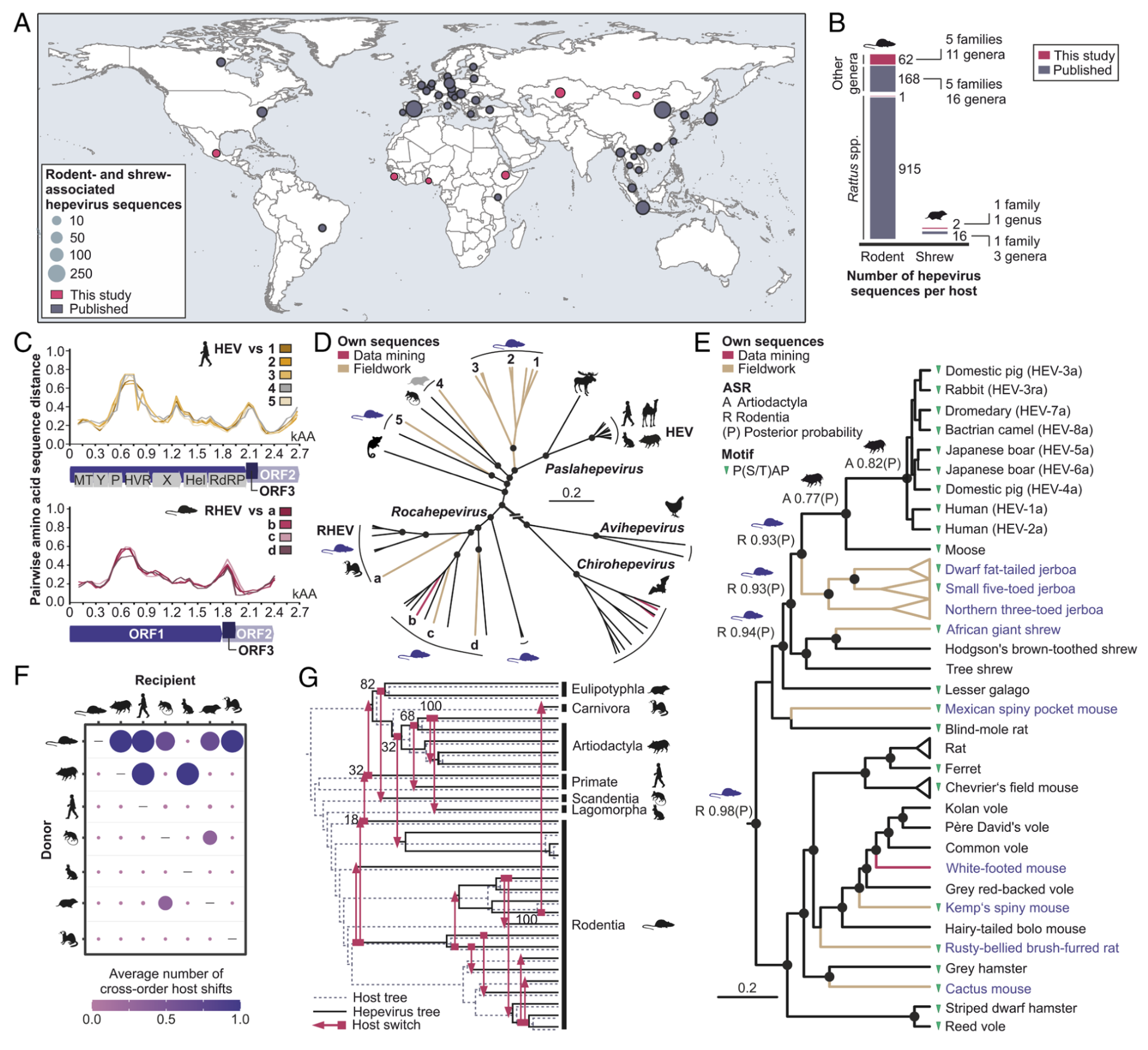
Hepatitis E virus (HEV; family Hepeviridae) infections cause >40,000 human deaths annually. Zoonotic infections predominantly originate from ungulates and occasionally from rats, highlighting the zoonotic potential of rodent-associated hepeviruses. We conducted host genomic data mining and uncovered two genetically divergent rodent-associated hepeviruses, and two bat-associated hepeviruses genetically related to known bat-associated strains. We thus analyzed 2,565 liver specimens from 108 rodent and shrew species sampled from globally understudied regions and hosts in Africa, Asia, and Latin America during 2011-2018 for hepeviruses by RT–PCR. We detected 63 positive field samples (2.5%, 95% CI 1.9-3.1) from 14 animal species, including two coinfections with genetically divergent strains and significant variation (X2, P < 0.001) in detection rates between study sites. Strain-specific qRT–PCR assays showed virus concentrations between 9.2 × 10² and 3.2 × 10⁹ copies/g. We recovered 24 near-complete hepeviral genomes from rodents, shrews, and bats, all showing three partially overlapping open reading frames (ORFs), some including putative late domains that may be associated with quasi-envelopment. Rodent-derived hepeviruses grouped into five clades clustering in basal sister relationship to human- (31 to 84% distance in translated ORF1-3) and rat-associated HEV. Parsimony-based analyses and cophylogenetic reconciliations revealed that rodents were predominant sources of hepeviral cross-order host shifts. Bayesian ancestral state reconstructions substantiated a direct origin of human-associated HEV in ungulates such as swine and camelids (posterior probability 0.8), whereas the nonrecent evolutionary origins of human- and ungulate-associated HEV were projected to rodent hosts (posterior probability > 0.9). Our results elucidate the genealogy of human HEV and warrant increased surveillance and experimental risk assessments for rodent-associated hepeviruses.

Discovery and biological confirmation of a highly divergent Tacaribe virus in metatranscriptomic data from neotropical bats

Discovery and biological confirmation of a highly divergent Tacaribe virus in metatranscriptomic data from neotropical bats

First isolated from neotropical fruit bats in Trinidad in 1956, Tacaribe virus (TCRV) has rarely been detected since. We searched for New World arenavirus reads in roughly 5.7 million sequencing runs available on public databases using Serratus. We recovered a complete genome of a divergent TCRV in metatranscriptomic data derived from heart and eye tissue of an adult male Jamaican fruit-eating bat sampled in the Dominican Republic, 2014. In total, 2,733 reads were mapped resulting in mean coverages of 7.4-fold for the L and 10.2-fold for the S segment. Re-testing original bat specimens showed the highest viral loads in liver tissue (245 copies/mg). Sanger sequencing of PCR amplicons from liver confirmed correctness of and completed the genome recovered from metatranscriptomic data, revealing conserved arenavirus genomic organization, length, intergenic regions, and genome termini. The newly found TCRV strain tentatively named DOM2014 clustered in a basal sister relationship to all other known TCRV strains with which it shared between 83.3%–86.0% genomic and 91.8%–93.7% translated amino acid sequence identity across protein-coding regions. DOM2014 showed a conserved glycine, proline, proline, threonine (GPPT) nucleoprotein motif, which is essential for TCRV interferon β antagonism. Our data confirm the association of TCRV with the bat genus Artibeus put into question by lethal experimental infections and scarce bat-derived TCRV genomic data. Broad genetic diversity and geographic spread require assessments of TCRV strain-associated pathogenicity, particularly for DOM2014 as a highly divergent TCRV strain. Confirmation of genomic database findings by testing original specimens provides robustness to our findings and supports the usefulness of metatranscriptomic studies.

Socioeconomic determinants potentially underlying differential global SARS-CoV-2 testing capacity: an ecological study

Socioeconomic determinants potentially underlying differential global SARS-CoV-2 testing capacity: an ecological study

This study, conducted by Dr. Andrés Moreira-Soto, Dr. Jan Felix Drexler (Charité – Universitätsmedizin Berlin) and colleagues, examined how economic and social factors influence the number of COVID-19 tests performed (testing capacity) in 109 countries between 2020 and 2021. They found that socioeconomic and gender inequalities play a critical role in shaping testing capacity, highlighting the need for equitable access to healthcare and targeted public health interventions.

Experimental infection of Artibeus lituratus bats and no detection of Zika virus in neotropical bats from French Guiana, Peru, and Costa Rica suggests a limited role of bats in Zika transmission

Experimental infection of Artibeus lituratus bats and no detection of Zika virus in neotropical bats from French Guiana, Peru, and Costa Rica suggests a limited role of bats in Zika transmission

brown and black butterfly on brown tree branch during daytime

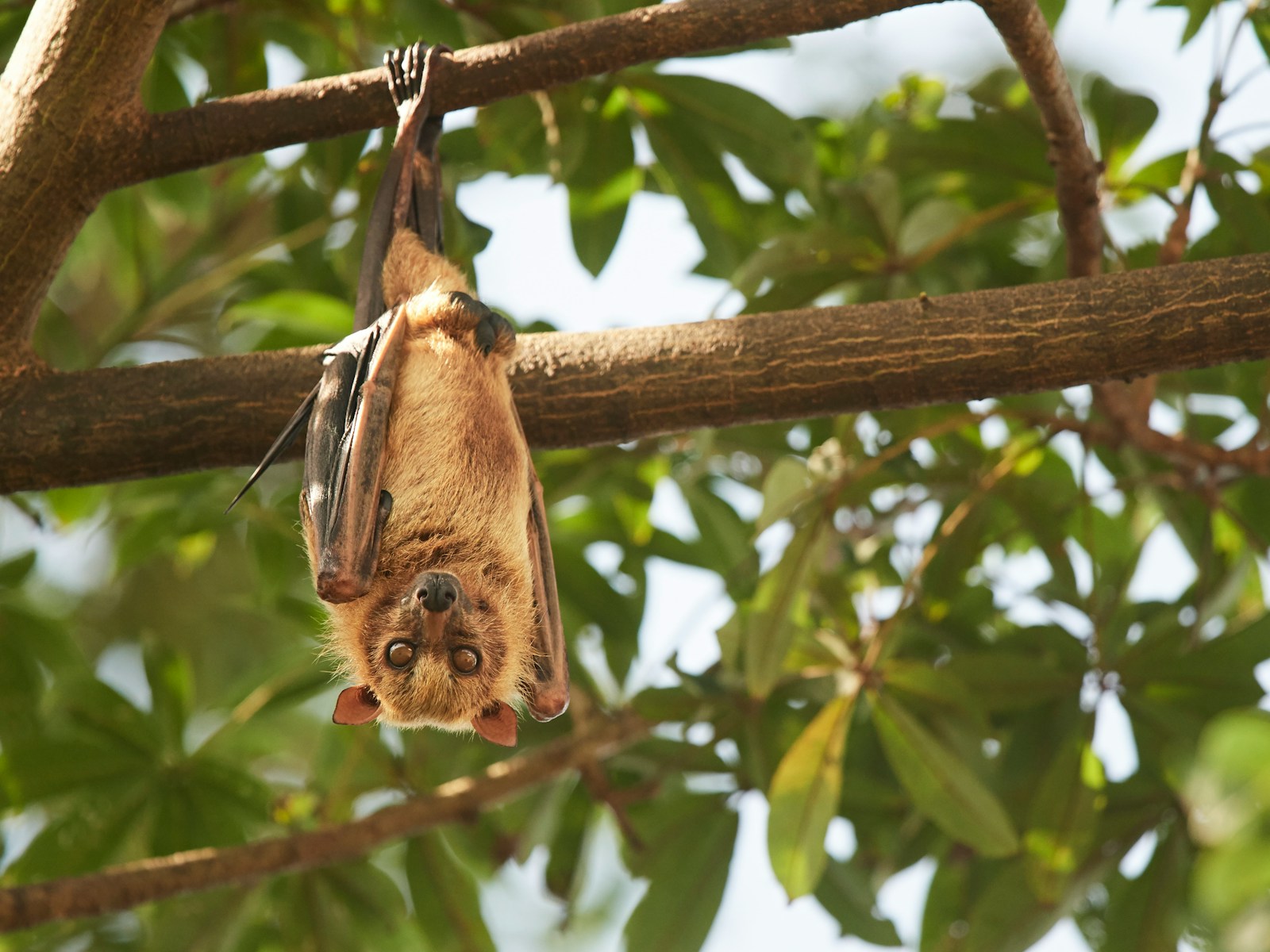
Bats are important natural reservoir hosts of a diverse range of viruses that can be transmitted to humans and have been suggested to play an important role in the Zika virus (ZIKV) transmission cycle. However, the exact role of these animals as reservoirs for flaviviruses is still controversial. To further expand our understanding of the role of bats in the ZIKV transmission cycle in Latin America, we carried out an experimental infection in wild-caught Artibeus lituratus bats and sampled several free-living neotropical bats across three countries of the region. Experimental ZIKV infection was performed in wild-caught adult bats (4 females and 5 males). The most relevant findings were hemorrhages in the bladder, stomach and patagium. Significant histological findings included inflammatory infiltrate consisting of a predominance of neutrophils and lymphocytes, in addition to degeneration in the reproductive tract of males and females. This suggests that bat reproduction might be at some level affected by ZIKV. Leukopenia was also observed in some inoculated animals. Hemorrhages, genital alterations, and leukopenia are suggested to be caused by ZIKV; however, since these were wild-caught bats, we cannot exclude other agents. Detection of ZIKV by qPCR was observed at low concentrations in only two urine samples in two inoculated animals. All other animals and tissues tested were negative. Finally, no virus-neutralizing antibodies were found in any animal. To determine ZIKV infection in nature, the blood of a total of 2056 bats was sampled for ZIKV detection by qPCR. Most of the sampled individuals belonged to the genus Pteronotus sp. (23%), followed by the species Carollia sp. (17%),
Anoura sp. (14%), and Molossus sp. (13.7%). No sample of any tested species was positive for ZIKV by qPCR. These results together suggest that bats are not efficient amplifiers or reservoirs of ZIKV and may not have an important role in ZIKV transmission dynamics.

Virulent Brucella nosferati infecting Desmodus rotundus has emerging potential due to the broad foraging range of its bat host for humans and wild and domestic animals

Virulent Brucella nosferati infecting Desmodus rotundus has emerging potential due to the broad foraging range of its bat host for humans and wild and domestic animals

Desmodus rotundus, vampire bats, transmit dangerous infections, and brucellosis is a hazardous zoonotic disease, two adversities that coexist in the subtropical and tropical areas of the American continent. Here, we report a 47.89% Brucella infection prevalence in a colony of vampire bats inhabiting the tropical rainforest of Costa Rica.

The bacterium induced placentitis and fetal death in bats. Wide-range phenotypic and genotypic characterization placed the Brucella organisms as a new pathogenic species named Brucella nosferati sp. nov., isolated from bat tissues, including the salivary glands, suggesting feeding behavior might favor transmission to their prey.

Overall analyses placed B. nosferati as the etiological agent of a reported canine brucellosis case, demonstrating its potential for infecting other hosts. To assess the putative prey hosts, we analyzed the intestinal contents of 14 infected and 23 non-infected bats by proteomics. A total of 54,508 peptides sorted into 7,203 unique peptides corresponding to 1,521 proteins were identified. Twenty-three wildlife and domestic taxa, including humans, were foraged by B. nosferati-infected D. rotundus, suggesting contact of this bacterium with a broad range of hosts. Our approach is appropriate for detecting, in a single study, the prey preferences of vampire bats in a diverse area, demonstrating its suitability for control strategies where vampire bats thrive.