Virulent Brucella nosferati infecting Desmodus rotundus has emerging potential due to the broad foraging range of its bat host for humans and wild and domestic animals

Virulent Brucella nosferati infecting Desmodus rotundus has emerging potential due to the broad foraging range of its bat host for humans and wild and domestic animals

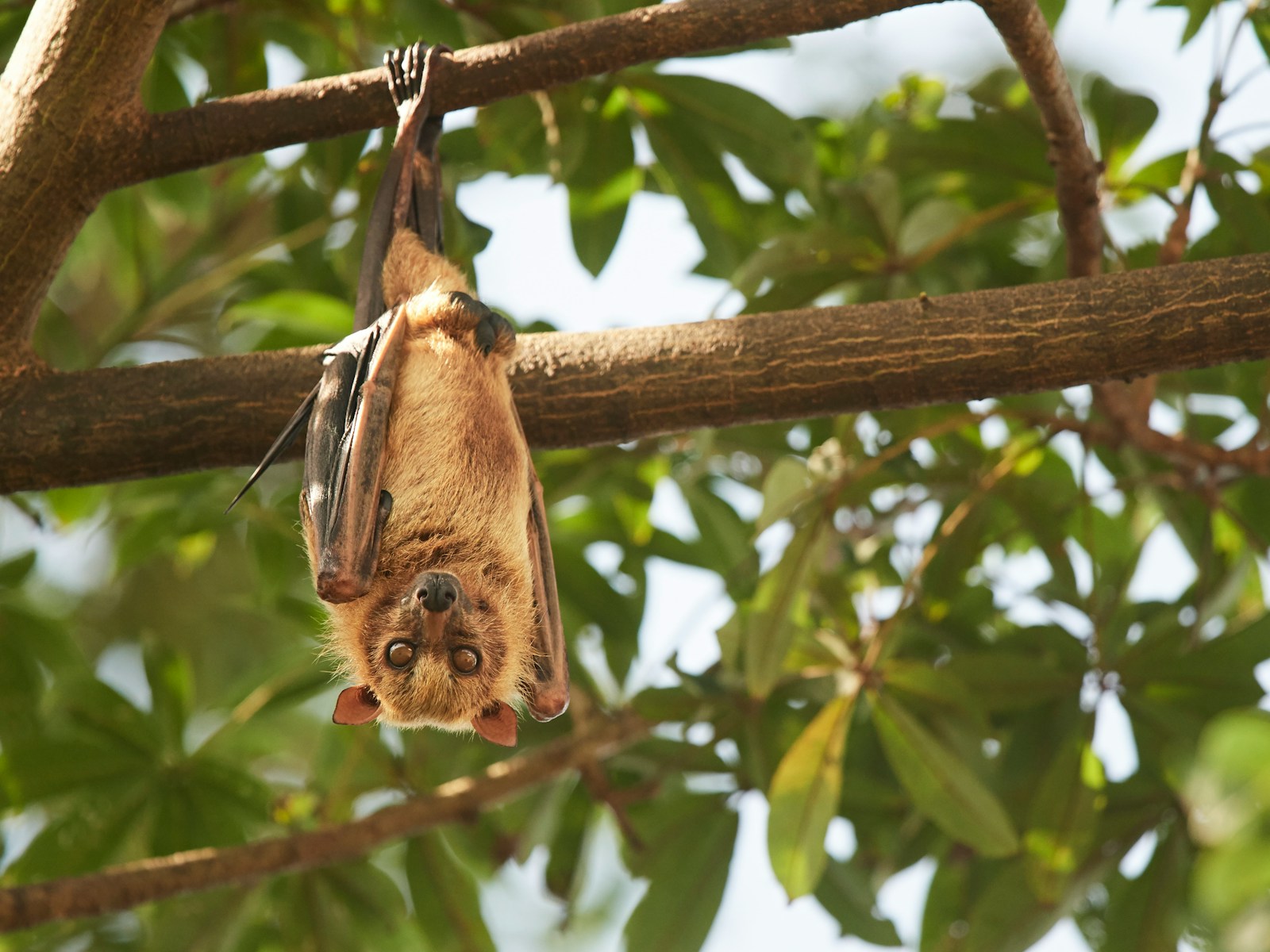
Desmodus rotundus, vampire bats, transmit dangerous infections, and brucellosis is a hazardous zoonotic disease, two adversities that coexist in the subtropical and tropical areas of the American continent. Here, we report a 47.89% Brucella infection prevalence in a colony of vampire bats inhabiting the tropical rainforest of Costa Rica.

The bacterium induced placentitis and fetal death in bats. Wide-range phenotypic and genotypic characterization placed the Brucella organisms as a new pathogenic species named Brucella nosferati sp. nov., isolated from bat tissues, including the salivary glands, suggesting feeding behavior might favor transmission to their prey.

Overall analyses placed B. nosferati as the etiological agent of a reported canine brucellosis case, demonstrating its potential for infecting other hosts. To assess the putative prey hosts, we analyzed the intestinal contents of 14 infected and 23 non-infected bats by proteomics. A total of 54,508 peptides sorted into 7,203 unique peptides corresponding to 1,521 proteins were identified. Twenty-three wildlife and domestic taxa, including humans, were foraged by B. nosferati-infected D. rotundus, suggesting contact of this bacterium with a broad range of hosts. Our approach is appropriate for detecting, in a single study, the prey preferences of vampire bats in a diverse area, demonstrating its suitability for control strategies where vampire bats thrive.

Inhibition of Pertussis Toxin by Human α-Defensins-1 and -5: Differential Mechanisms of Action

Inhibition of Pertussis Toxin by Human α-Defensins-1 and -5: Differential Mechanisms of Action

Whooping cough is a severe childhood disease, caused by the bacterium Bordetella pertussis, which releases pertussis toxin (PT) as a major virulence factor. Previously, we identified the human antimicrobial peptides α-defensin-1 and -5 as inhibitors of PT and demonstrated their capacity to inhibit the activity of the PT enzyme subunit PTS1. Here, the underlying mechanism of toxin inhibition was investigated in more detail, which is essential for developing the therapeutic potential of these peptides. Flow cytometry and immunocytochemistry revealed that α-defensin-5 strongly reduced PT binding to, and uptake into cells, whereas α-defensin-1 caused only a mild reduction. Conversely, α-defensin-1, but not α-defensin-5 was taken up into different cell lines and interacted with PTS1 inside cells, based on proximity ligation assay. In-silico modeling revealed specific interaction interfaces for α-defensin-1 with PTS1 and vice versa, unlike α-defensin-5. Dot blot experiments showed that α-defensin-1 binds to PTS1 and even stronger to its substrate protein Gαi in vitro. NADase activity of PTS1 in vitro was not inhibited by α-defensin-1 in the absence of Gαi. Taken together, these results suggest that α-defensin-1 inhibits PT mainly by inhibiting enzyme activity of PTS1, whereas α-defensin-5 mainly inhibits cellular uptake of PT. These findings will pave the way for optimization of α-defensins as novel therapeutics against whooping cough.

GLACIER Workshop: From Immunology to Bioactive Compounds

GLACIER Workshop: From Immunology to Bioactive Compounds

© IPB

On July 5-6, GLACIER fellows, scientists and interested parties met for the GLACIER workshop “From Immunology to Bioactive Compounds” in Halle. The GLACIER PI team attended the networking meeting, which took place at the Leibniz Institute of Plant Biochemistry (IPB). GLACIER fellows presented their current state of research, and the program featured several talks by renowned scientists in the GLACIER focus areas of immunology, vaccine and drug discovery, and social sciences.

During the workshop session, questions such as How to intensify the collaboration within the GLACIER consortium in the future? and How to increase the participation of the smaller Latin American countries of the project in the network? were lively discussed in colorful mixed groups.

During the dinner that followed, we were able to continue exchanging ideas and making contacts in an informal atmosphere. All in all, it was a very successful event that offered the participants a lot of input and networking opportunities.

The German Ambassador visits our GLACIER Lab in Cuba

The German Ambassador visits our GLACIER Lab in Cuba

© GLACIER / Photo: Daniel García

Last week there was an official visit of the Ambassador Extraordinary and Plenipotentiary of Germany in the Republic of Cuba, Frau Heidrun Tempel, to the GLACIER Lab at the University of Havana.

© Deutscher Ethikrat / Photo: Christian Tiel

The aim of the visit was to know first hand the research and training activities made in the GLACIER Center at the University of Havana and to offer support from the embassy for the cooperation activities between Cuba and Germany.

© GLACIER / Photo: Daniel García

The ambassador was hosted by Professor Julieta Coro Bermello, who is the deputy coordinator of the GLACIER center in Havana.