





A COVID-19 vaccine candidate composed of the SARS-CoV-2 RBD dimer and Neisseria meningitidis outer membrane vesicles

A COVID-19 vaccine candidate composed of the SARS-CoV-2 RBD dimer and Neisseria meningitidis outer membrane vesicles

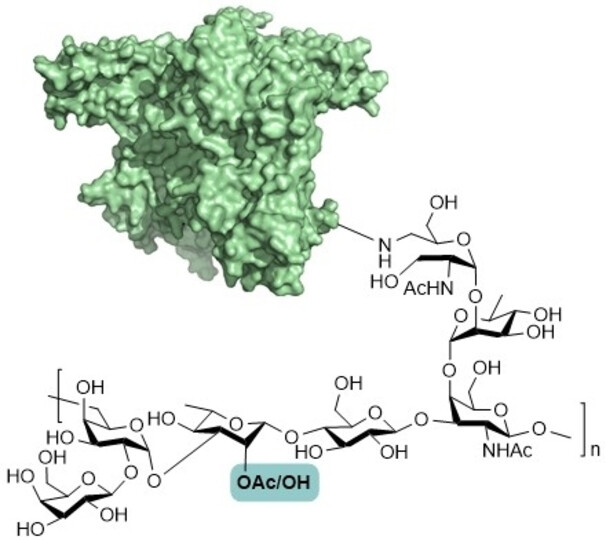
SARS-CoV-2 infection is mediated by the interaction of the spike glycoprotein trimer via its receptor-binding domain (RBD) with the host’s cellular receptor. Vaccines seek to block this interaction by eliciting neutralizing antibodies, most of which are directed toward the RBD. Many protein subunit vaccines require powerful adjuvants to generate a potent antibody response. Here, we report on the use of a SARS-CoV-2 dimeric recombinant RBD combined with Neisseria meningitidis outer membrane vesicles (OMVs), adsorbed on alum, as a promising COVID-19 vaccine candidate. This formulation induces a potent and neutralizing immune response in laboratory animals, which is higher than that of the dimeric RBD alone adsorbed on alum. Sera of people vaccinated with this vaccine candidate, named Soberana01, show a high inhibition level of the RBD-ACE2 interaction using RBD mutants corresponding to SARS-CoV-2 variants of concern and wild-type expressed using the phage display technology. To our knowledge, this is the first time that the immunostimulation effect of N. meningitidis OMVs is evaluated in vaccine candidates against SARS-CoV-2.

In vitro Characterization of Anti-SARS-CoV-2 Intravenous Immunoglobulins (IVIg) Produced From Plasma of Donors Immunized With the BNT162b2 Vaccine and Its Comparison With a Similar Formulation Produced From Plasma of COVID-19 Convalescent Donors

In vitro Characterization of Anti-SARS-CoV-2 Intravenous Immunoglobulins (IVIg) Produced From Plasma of Donors Immunized With the BNT162b2 Vaccine and Its Comparison With a Similar Formulation Produced From Plasma of COVID-19 Convalescent Donors

Despite vaccines are the main strategy to control the ongoing global COVID-19 pandemic, their effectiveness could not be enough for individuals with immunosuppression. In these cases, as well as in patients with moderate/severe COVID-19, passive immunization with anti-SARS-CoV-2 immunoglobulins could be a therapeutic alternative. We used caprylic acid precipitation to prepare a pilot-scale batch of anti-SARS-CoV-2 intravenous immunoglobulins (IVIg) from plasma of donors immunized with the BNT162b2 (Pfizer-BioNTech) anti-COVID-19 vaccine (VP-IVIg) and compared their in vitro efficacy and safety with those of a similar formulation produced from plasma of COVID-19 convalescent donors (CP-IVIg). Both formulations showed immunological, physicochemical, biochemical, and microbiological characteristics that meet the specifications of IVIg formulations. Moreover, the concentration of anti-RBD and ACE2-RBD neutralizing antibodies was higher in VP-IVIg than in CP-IVIg. In concordance, plaque reduction neutralization tests showed inhibitory concentrations of 0.03–0.09 g/L in VP-IVIg and of 0.06–0.13 in CP-IVIg. Thus, VP-IVIg has in vitro efficacy and safety profiles that justify their evaluation as therapeutic alternative for clinical cases of COVID-19. Precipitation with caprylic acid could be a simple, feasible, and affordable alternative to produce formulations of anti-SARS-CoV-2 IVIg to be used therapeutically or prophylactically to confront the COVID-19 pandemic in middle and low-income countries.

Improved Access to Potent Anticancer Tubulysins and Linker-Functionalized Payloads Via an All-On-Resin Strategy

Improved Access to Potent Anticancer Tubulysins and Linker-Functionalized Payloads Via an All-On-Resin Strategy

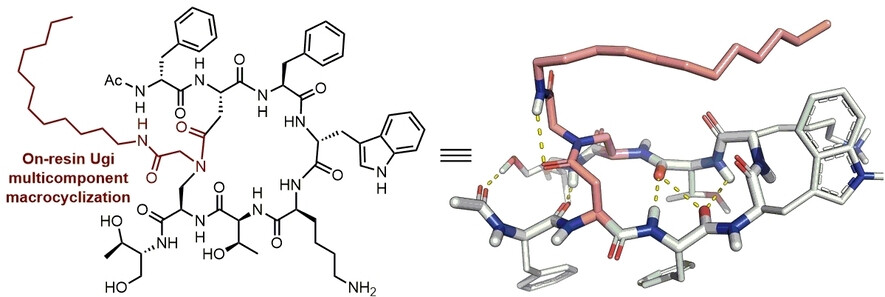
Tubulysins are among the most recent antimitotic compounds to enter into antibody/peptide-drug conjugate (ADC/PDC) development. Thus far, the design of the most promising tubulysin payloads relied on simplifying their structures, e. g., by using small tertiary amide N-substituents (Me, Et, Pr) on the tubuvaline residue. Cumbersome solution-phase approaches are typically used for both syntheses and functionalization with cleavable linkers. p-Aminobenzyl quaternary ammonium (PABQ) linkers were a remarkable advancement for targeted delivery, but the procedures to incorporate them into tubulysins are only of moderate efficiency. Here we describe a novel all-on-resin strategy permitting a loss-free resin linkage and an improved access to super potent tubulysin analogs showing close resemblance to the natural compounds. For the first time, a protocol enables the integration of on-resin tubulysin derivatization with, e. g., a maleimido-Val-Cit-PABQ linker, which is a notable progress for the payload-PABQ-linker technology. The strategy also allows tubulysin diversification of the internal amide N-substituent, thus enabling to screen a tubulysin library for the discovery of new potent analogs. This work provides ADC/PDC developers with new tools for both rapid access to new derivatives and easier linker-attachment and functionalization.

Serologic Evidence for Early SARS–CoV-2 Circulation in Lima, Peru, 2020

Serologic Evidence for Early SARS–CoV-2 Circulation in Lima, Peru, 2020

During early 2021, Peru had the highest COVID-19–associated per-capita mortality rate. Socioeconomic inequality, insufficiently prepared healthcare, and surveillance systems are factors explaining the mortality rate, which can be severely worsened by early undetected SARS–CoV-2 circulation. We tested 1,441 individuals with fever sampled during August 2019–May 2021, several months before the first SARS–CoV-2 seroprevalence study available so far in Lima, Peru, for SARS–CoV-2–specific antibodies. The testing algorithm included a chemiluminescence immunoassay and surrogate virus neutralization test. Early positive samples (N = 24) from January–March 2020 were further tested using a plaque-reduction neutralization test (PRNT) and avidity test against the SARS–CoV-2 spike and nucleoprotein. None of the early samples were PRNT-confirmed, in contrast to 81.8% (18/22) of a subsample from April 2020 onward (Fisher exact test; P <0.0001). Therefore, we excluded non-PRNT–confirmed samples from subsequent analyses. The SARS–CoV-2 antibody detection rate was 0.9% in mid-April 2020 (1/104; 95% CI: 0.1–5.8%), suggesting viral circulation in early-middle March 2020, consistent with the first molecular detection of SARS–CoV-2 in Peru on March 2020. Mean avidity increase of 62–77% to 81–94% from all PRNT-confirmed SARS–CoV-2–positive samples during early 2020 were consistent with onset of SARS–CoV-2 circulation during late February/March 2020. Early circulation was also confirmed in a susceptible, exposed, infected, and recovered mathematical model that calculated an effective reproduction number >1 during February–March 2020. Early introduction of SARS-CoV-2 thus contributed to the high COVID-19 mortality rate in Peru. Emphasizing the role of diagnostic confirmation in understanding the pandemic’s trajectory, this study highlights the importance of early detection and accurate testing in managing infectious disease outbreaks.

The Designed Pore-Forming Antimicrobial Peptide C14R Combines Excellent Activity against the Major Opportunistic Human Pathogen Pseudomonas aeruginosa with Low Cytotoxicity

The Designed Pore-Forming Antimicrobial Peptide C14R Combines Excellent Activity against the Major Opportunistic Human Pathogen Pseudomonas aeruginosa with Low Cytotoxicity

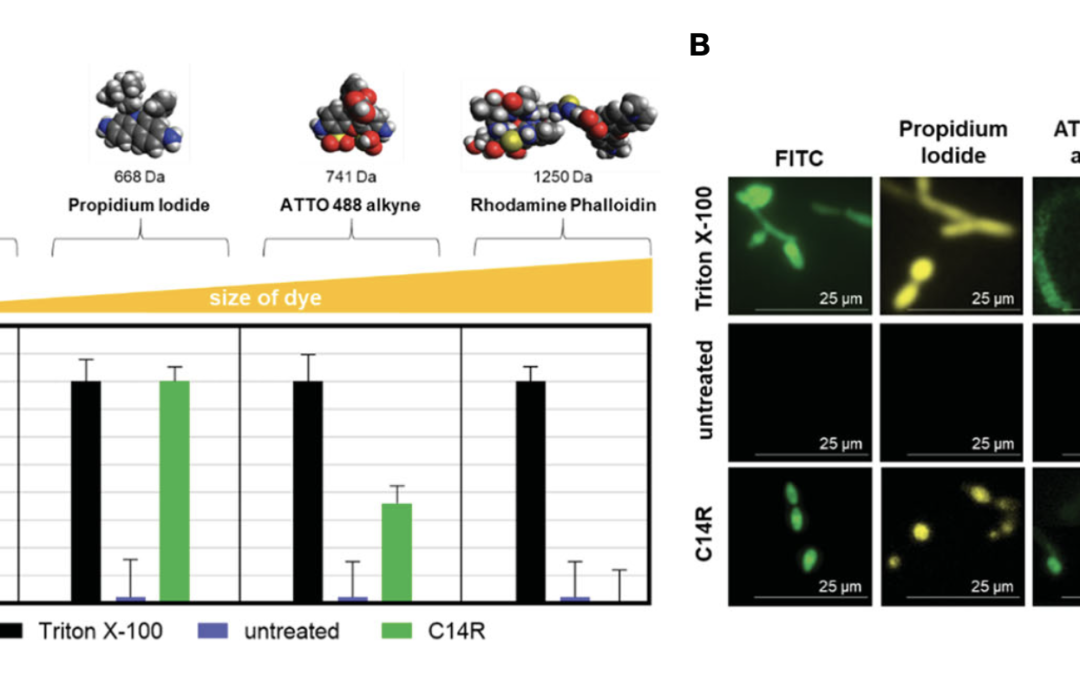
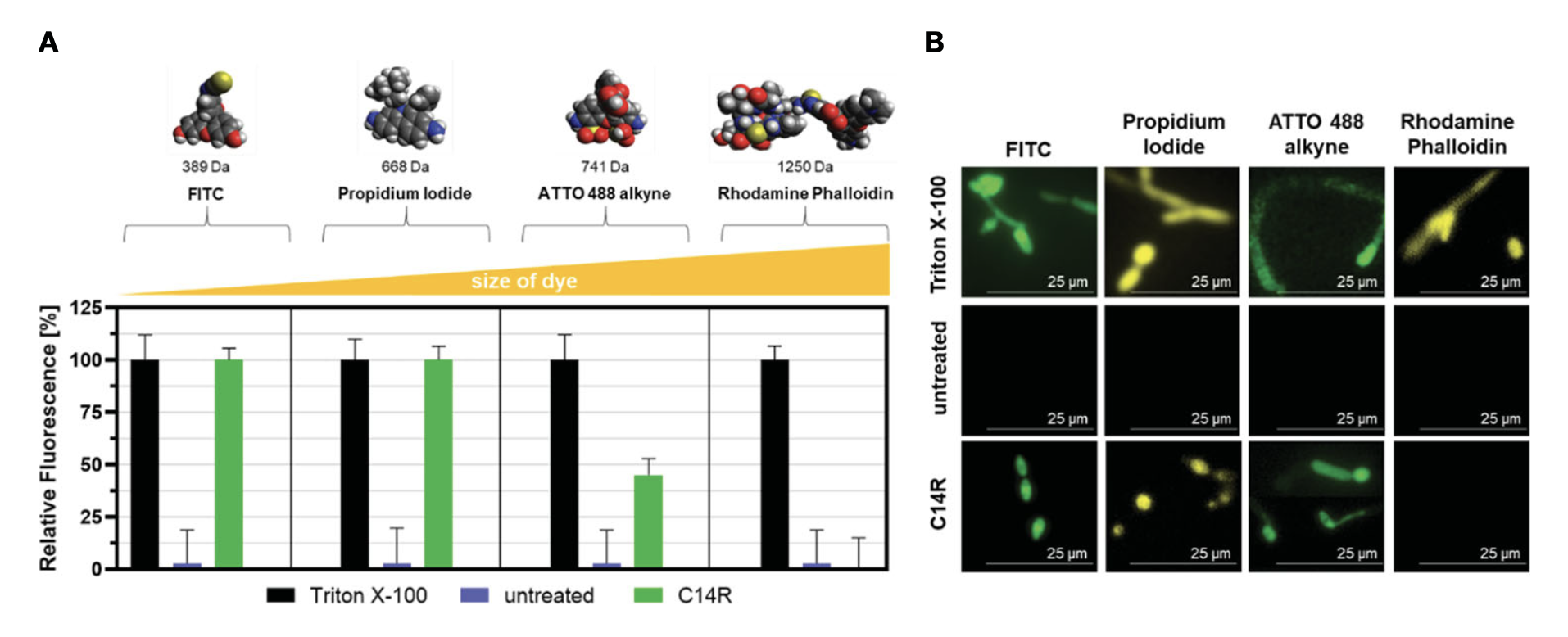
The diminishing portfolio of mankind’s available antibiotics urges science to develop novel potent drugs. Here, we present a peptide fitting the typical blueprint of amphipathic and membrane-active antimicrobial peptides, denominated C14R. This 2 kDa peptide consists of 16 amino acid residues, with seven being either hydrophobic, aromatic, or non-polar, and nine being polar or positively charged, strictly separated on opposite sides of the predicted α-helix. The affinity of the peptide C14R to P. aeruginosa membranes and its intrinsic tendency to productively insert into membranes of such composition were analyzed by dynamic simulations. Its biological impact on the viability of two different P. aeruginosa reference strains was demonstrated by determining the minimal inhibitory concentrations (MICs), which were found to be in the range of 10–15 µg/mL. C14R’s pore-forming capability was verified in a permeabilization assay based on the peptide-triggered uptake of fluorescent dyes into the bacterial cells. Finally, the peptide was used in radial diffusion assays, which are commonly used for susceptibility testing of antimicrobial peptides in clinical microbiology. In comparison to reference strains, six clinical P. aeruginosa isolates were clearly affected, thereby paving the way for further in-depth analyses of C14R as a promising new AMP drug in the future.