Multicomponent Functionalization of the Octreotide Peptide Macrocyclic Scaffold

Multicomponent Functionalization of the Octreotide Peptide Macrocyclic Scaffold

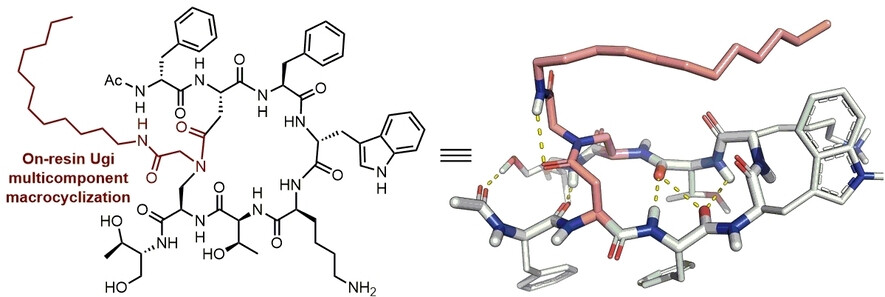
The replacement of the disulfide bridge by other types of side chain linkages has been a continuous endeavor in the development of cyclic peptide drugs with improved metabolic stability. Octreotide is a potent and selective somatostatin analog that has been used as an anticancer agent, in radiolabeled conjugates for the localization of tumors and as targeting moiety in peptide-drug conjugates. Here, we describe an on-resin methodology based on a multicomponent macrocyclization that enables the substitution of the disulfide bond by a tertiary lactam bridge functionalized with a variety of exocyclic moieties, including lipids, fluorophores, and charged groups. Conformational analysis in comparison with octreotide provides key information on the type of functionalization permitting the conformational mimicry of the bioactive peptide.

Effect of O-Acetylation on the Antigenicity and Glycoconjugate Immunogenicity of the Streptococcus Pneumoniae Serotype 7F Capsular Polysaccharide

Effect of O-Acetylation on the Antigenicity and Glycoconjugate Immunogenicity of the Streptococcus Pneumoniae Serotype 7F Capsular Polysaccharide

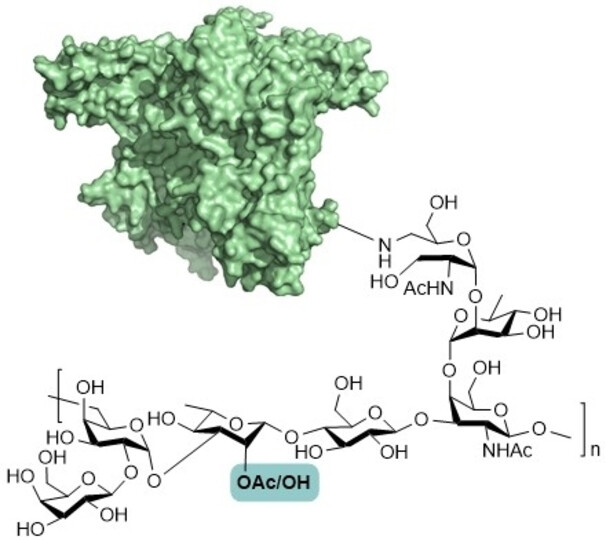
Streptococcus pneumoniae is a bacterial pathogen causing diseases as severe as pneumonia, sepsis and meningitis. Most commercial pneumococcal conjugate vaccines contain the 7F serotype, which is epidemiologically relevant and highly invasive. This serotype contains an O-acetyl group at the internal L-rhamnose of its polysaccharide repeating unit. Herein we report on the role of the O-acetyl moiety of 7F polysaccharide in both antigen recognition and the induction of a protective antibody response against 7F. Fully and partially de-O-acetylated 7F polysaccharides were chemically prepared and compared with the O-acetylated counterpart in their antigenicity and immunogenicity of their tetanus toxoid glycoconjugates. These comparative studies showed a slight but consistent decrease in the antigenicity for the fully de-O-acetylated polysaccharide, but not for the partly de-O-acetylated variant. The glycoconjugates derived from the O-acetylated and the fully de-O-acetylated polysaccharides had similar sizes and polysaccharide-to-protein ratio, and all proved both to be immunogenic and induce opsonophagocytic responses in mice. Nevertheless, the immune response elicited by the O-acetylated glycoconjugate was better in both quantity and quality, proving that the O-acetyl group is not strictly necessary but also not irrelevant for the antigenicity and immunogenicity of the 7F serotype polysaccharide and its glycoconjugates.

Epidemiological, virological and clinical characterization of a Dengue/Zika outbreak in the Caribbean region of Costa Rica 2017–2018

Epidemiological, virological and clinical characterization of a Dengue/Zika outbreak in the Caribbean region of Costa Rica 2017–2018

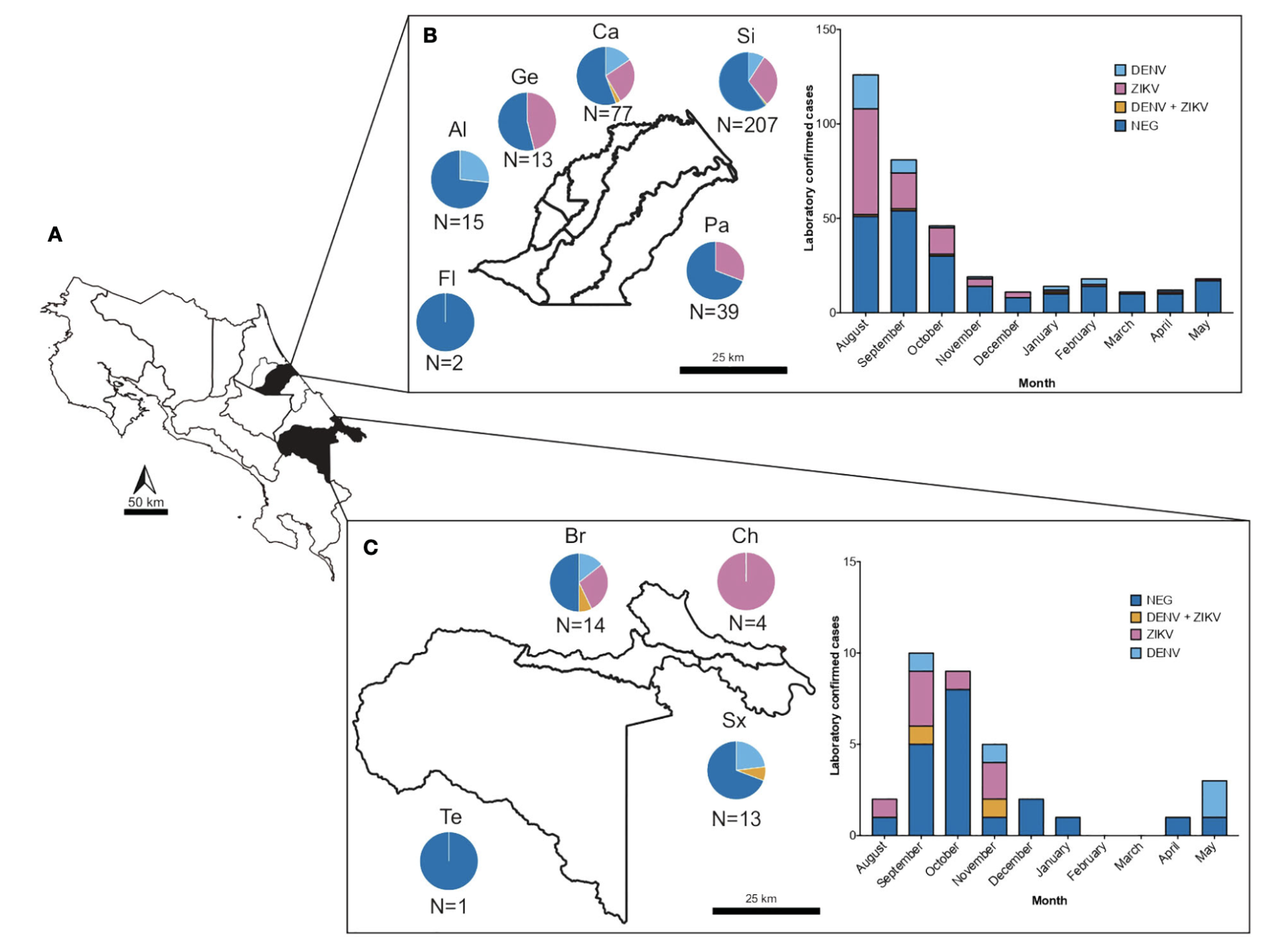
The increase in incidence and geographical expansion of viruses transmitted by the Aedes mosquitoes, such as dengue (DENV) and zika (ZIKV) in the Americas, represents a burden for healthcare systems in tropical and subtropical regions. These and other under-detected arboviruses co-circulate in Costa Rica, adding additional complexity to their management due to their shared epidemiological behavior and similarity of symptoms in early stages. Since diagnostics of febrile illness is mostly based on clinical symptoms alone, we gathered acute-phase serum and urine from 399 samples of acute dengue-like cases from two healthcare facilities of Costa Rica, during an outbreak of arboviruses from July 2017 to May 2018, and tested them using molecular and serological methods. The analyses showed that of the clinically presumptive arbovirus cases that were reported, only 39.4% (n=153) of the samples were confirmed positive by RT-PCR to be DENV (DENV (10.3%), CHIKV (0.2%), ZIKV (27.3%), or mixed infections (1.5%). RT-PCR for other alphaviruses and flaviviruses, and PCR for Leptospira sp were negative. Furthermore, to assess flavivirus positivity in post-acute patients, the negative sera were tested against Dengue-IgM. 20% of sera were found positive, confounding even more the definitive number of cases, and emphasizing the need of several distinct diagnostic tools for accurate diagnostics. Molecular characterization of the prM and E genes from isolated viruses revealed that the American/Asian genotype of DENV-2 and the Asian lineage of ZIKV were circulating during this outbreak. Two different clades of DENV-2 American/Asian genotype were identified to co-circulate in the same region and a difference in the platelet and leukocyte count was noted between people infected with each clade, suggesting a putative distinct virulence. Our study sheds light on the necessity for healthcare strategies in managing arbovirus outbreaks, emphasizing the importance of comprehensive molecular and serological diagnostic approaches, as well as molecular characterization. This approach aids in enhancing our understanding of the clinical and epidemiological aspects of arboviral diseases during outbreaks. Our research highlights the need to strengthen training programs for health professionals and the need to increase research-based on laboratory evidence for diagnostic accuracy, guidance, development and implementation of public health interventions and epidemiological surveillance.


A COVID-19 vaccine candidate composed of the SARS-CoV-2 RBD dimer and Neisseria meningitidis outer membrane vesicles

A COVID-19 vaccine candidate composed of the SARS-CoV-2 RBD dimer and Neisseria meningitidis outer membrane vesicles

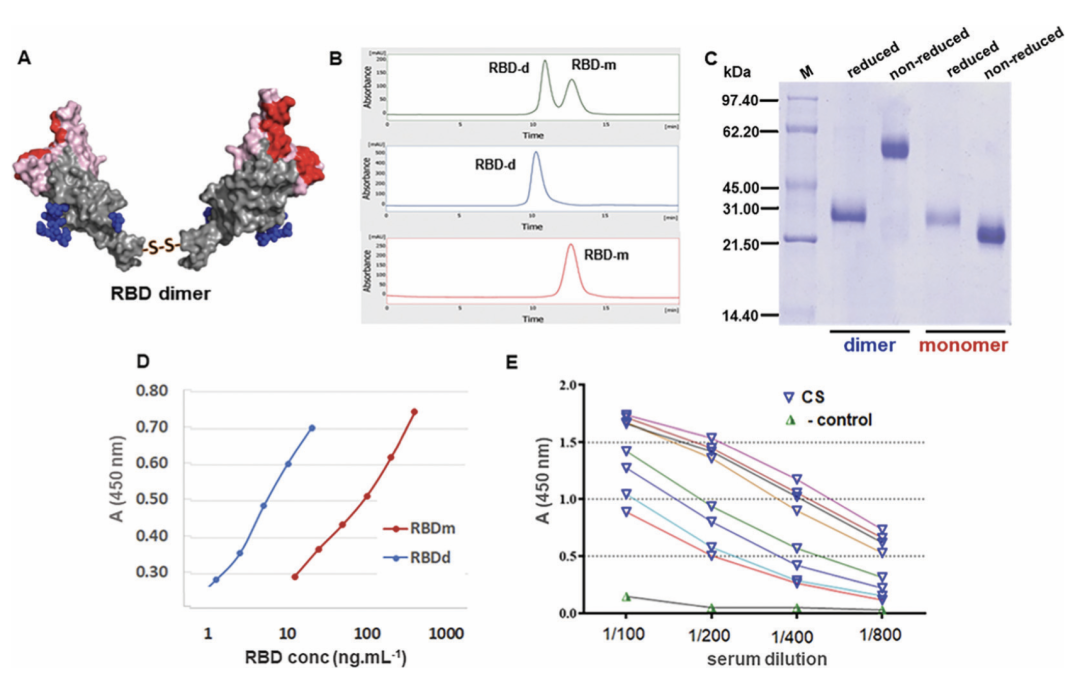
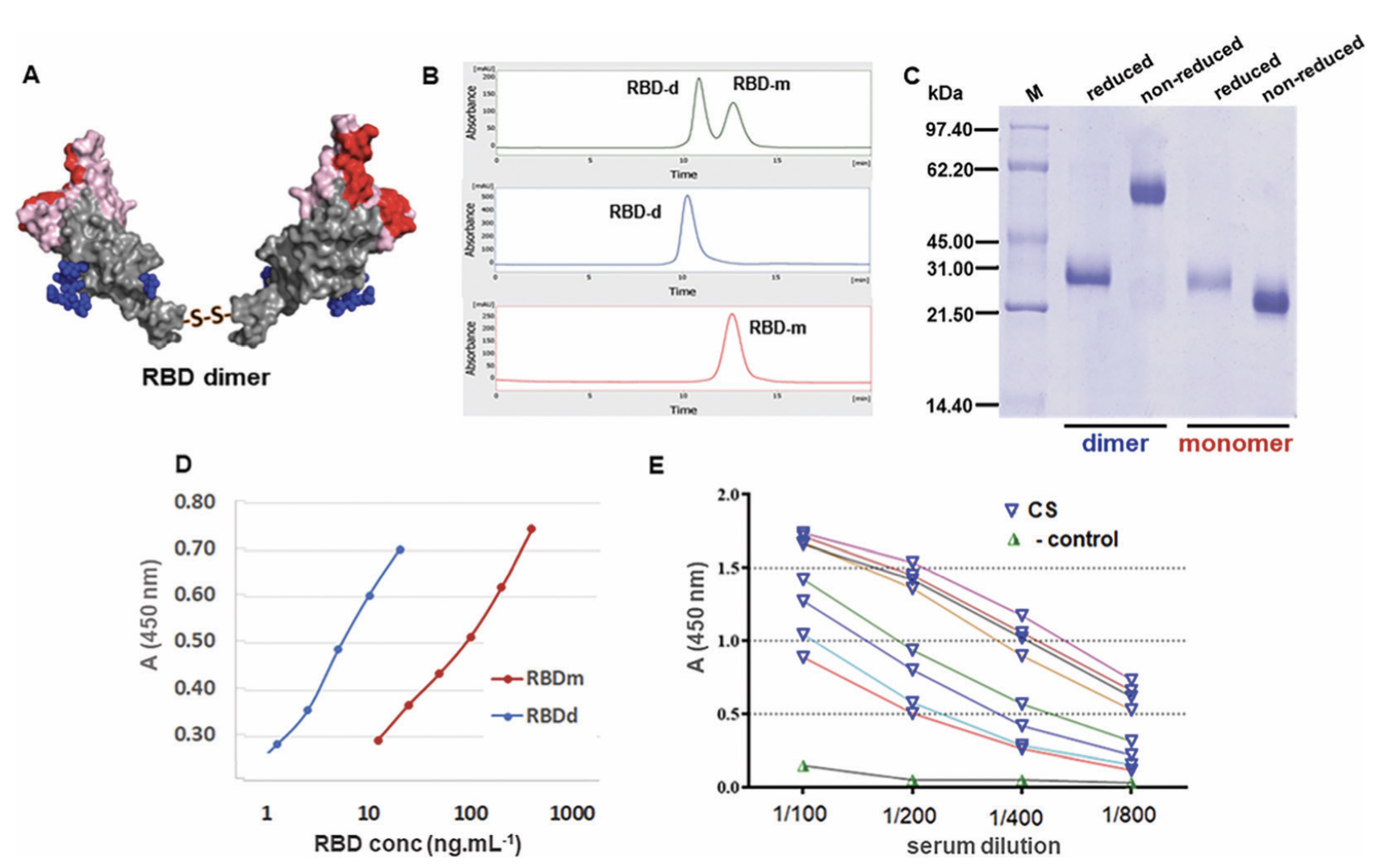
SARS-CoV-2 infection is mediated by the interaction of the spike glycoprotein trimer via its receptor-binding domain (RBD) with the host’s cellular receptor. Vaccines seek to block this interaction by eliciting neutralizing antibodies, most of which are directed toward the RBD. Many protein subunit vaccines require powerful adjuvants to generate a potent antibody response. Here, we report on the use of a SARS-CoV-2 dimeric recombinant RBD combined with Neisseria meningitidis outer membrane vesicles (OMVs), adsorbed on alum, as a promising COVID-19 vaccine candidate. This formulation induces a potent and neutralizing immune response in laboratory animals, which is higher than that of the dimeric RBD alone adsorbed on alum. Sera of people vaccinated with this vaccine candidate, named Soberana01, show a high inhibition level of the RBD-ACE2 interaction using RBD mutants corresponding to SARS-CoV-2 variants of concern and wild-type expressed using the phage display technology. To our knowledge, this is the first time that the immunostimulation effect of N. meningitidis OMVs is evaluated in vaccine candidates against SARS-CoV-2.

In vitro Characterization of Anti-SARS-CoV-2 Intravenous Immunoglobulins (IVIg) Produced From Plasma of Donors Immunized With the BNT162b2 Vaccine and Its Comparison With a Similar Formulation Produced From Plasma of COVID-19 Convalescent Donors

In vitro Characterization of Anti-SARS-CoV-2 Intravenous Immunoglobulins (IVIg) Produced From Plasma of Donors Immunized With the BNT162b2 Vaccine and Its Comparison With a Similar Formulation Produced From Plasma of COVID-19 Convalescent Donors

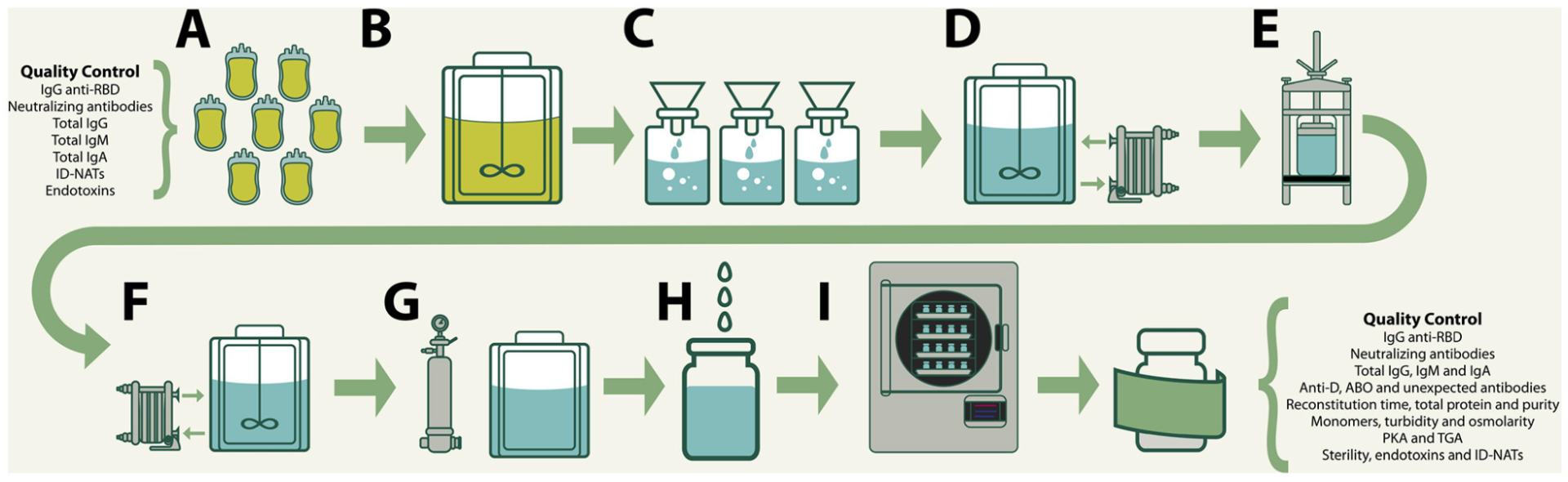
Despite vaccines are the main strategy to control the ongoing global COVID-19 pandemic, their effectiveness could not be enough for individuals with immunosuppression. In these cases, as well as in patients with moderate/severe COVID-19, passive immunization with anti-SARS-CoV-2 immunoglobulins could be a therapeutic alternative. We used caprylic acid precipitation to prepare a pilot-scale batch of anti-SARS-CoV-2 intravenous immunoglobulins (IVIg) from plasma of donors immunized with the BNT162b2 (Pfizer-BioNTech) anti-COVID-19 vaccine (VP-IVIg) and compared their in vitro efficacy and safety with those of a similar formulation produced from plasma of COVID-19 convalescent donors (CP-IVIg). Both formulations showed immunological, physicochemical, biochemical, and microbiological characteristics that meet the specifications of IVIg formulations. Moreover, the concentration of anti-RBD and ACE2-RBD neutralizing antibodies was higher in VP-IVIg than in CP-IVIg. In concordance, plaque reduction neutralization tests showed inhibitory concentrations of 0.03–0.09 g/L in VP-IVIg and of 0.06–0.13 in CP-IVIg. Thus, VP-IVIg has in vitro efficacy and safety profiles that justify their evaluation as therapeutic alternative for clinical cases of COVID-19. Precipitation with caprylic acid could be a simple, feasible, and affordable alternative to produce formulations of anti-SARS-CoV-2 IVIg to be used therapeutically or prophylactically to confront the COVID-19 pandemic in middle and low-income countries.